

Ever feel like your goals are miles away, like that cake you can’t eat yet? Or maybe you’re just hoping they’ll magically appear while you watch cat videos, complete with tiny hats? You’re in good company. Lots of us stare wistfully at our dreams, unsure how to get there. But guess what? There’s a trick called reverse planning that’s perfect for those big, scary goals. It’s like hitting rewind, taking you from the future to here and now. This article’ll show you how planning backwards can finally help you scratch those elusive goals off your list.
Table of Contents
- What is Reverse Planning?
- Why Reverse Planning Works
- Steps to Begin Reverse Planning
- Setting Clear Goals: The Foundation
- Establishing Your Project Reverse Schedule
- The Benefits of the Backward Planning Method
- Goal Setting Strategies in Reverse Planning
- Common Pitfalls and How to Avoid Them
- Case Study: Real-Life Success with Reverse Planning
- Conclusion: Moving Forward by Planning Backwards
1. What is Reverse Planning?
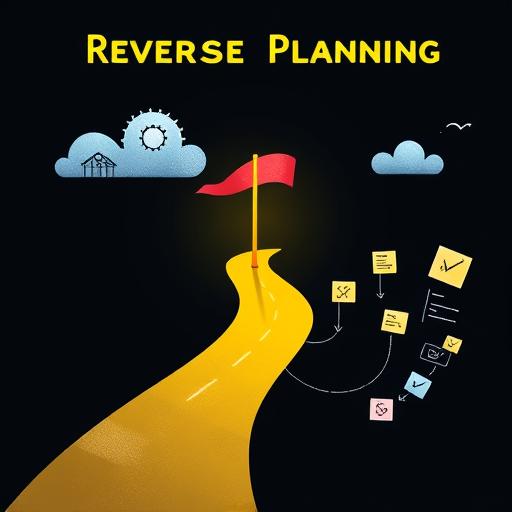
Imagine painting a beautiful landscape. But do it backward. Where you start at the end and work your way to the start. That’s reverse planning. It’s about beginning at the finish line, then finding your way back. Traditional planning, well, it’s like bumping around in the dark. But reverse planning? It gives you a clear picture of where you’re headed. Makes life easier, doesn’t it?
2. Why Reverse Planning Works
So, why’s it work? It’s like untangling fairy lights (the ones you should have packed better). Or undoing a ball of yarn. It helps you see the end, picture where you’re going, and get comfy with the idea of success. Less stress, more clarity. Feels good, right? By using the backward planning method, you break overwhelming projects into bite-sized, logical steps. You also anticipate obstacles before they appear, making adjustments in advance. It’s a mindset shift from scrambling last minute to confidently moving forward, knowing exactly what needs to happen and when.
3. Steps to Begin Reverse Planning
Ready to try it? Start by figuring out your final goal. What’s it look like? Write that shining objective down. Then…
- Figure out the milestones you need. What’s a good checkpoint?
- Write the tasks but do it like retracing steps to find missing keys.
- Map out this journey. Use a flowchart, sticky notes, or doodles to make it fun.
4. Setting Clear Goals: The Foundation

Let’s talk about goal setting. You wouldn’t road trip to Ice Cream Land without a map, right? Set specific goals using the SMART method—Specific, Measurable, Achievable, Relevant, and Time-bound. This goal setting strategy is your compass. Messing it up is like aiming for the Grand Canyon and ending up at a sand trap. With clear targets in place, the backward planning method becomes much easier to execute, because you know exactly where you’re headed and can work in reverse with confidence.
5. Establishing Your Project Reverse Schedule
Now, about timelines. Plan that grand finale first, then work backward. Scheduling might feel like extra work, but trust me, it’s awesome. Use calendars, apps, or plain ol’ paper. Having a reverse schedule? It’s like holding your life’s backstage pass. More control, less freaking out. This planning backwards approach turns deadlines into checkpoints rather than stress points. A solid project reverse schedule keeps you proactive instead of reactive, helping you anticipate challenges before they pop up and ensuring your milestones actually make sense.
6. The Benefits of the Backward Planning Method
Think about crossing a river on stones, but backwards. That’s the backward planning method—you think each step through in reverse. Fewer chances of falling into chaos. And you get all this with distractions fading away. Productivity rises while stress drops. Sounds nice, right? By mapping out the endpoint first, you can align every decision with that final goal. Planning backwards also reveals unnecessary steps you can cut, making your workflow smoother. It’s a clarity tool and a focus booster all in one.

7. Goal Setting Strategies in Reverse Planning
Flexibility is important. You aren’t a wizard (as much as that’s cool). Life throws curveballs. So, approach planning like yoga. Grounded yet flexible. Try:
- Blocking out time to stop procrastination.
- Prioritizing tasks, because elephants don’t fit in a fridge without moving the milk first.
8. Common Pitfalls and How to Avoid Them
Ever built a house of cards that collapsed like a birthday confetti shower? Reverse planning has pitfalls too. Like thinking we’re superheroes, or forgetting Murphy’s Law. No panic. Dodge these by adding buffer time, and adjusting plans as life hits with plot twists.
9. Case Study: Real-Life Success with Reverse Planning
In the hustle-bustle city, Jane, a stressed marketing manager, felt swamped by endless to-do lists. Then, reverse planning came to her rescue! For her big campaign, she started at the end, planning backward. Each milestone felt easier and easier, kinda like topping a sundae. Her final campaign? A massive success! Her boss loved it, and Jane finally had more time for hobbies, like knitting cat sweaters.
10. Conclusion: Moving Forward by Planning Backwards
Reverse planning goals are your golden ticket to success without the crazy stress or drama. Painting a path starting at the end, enjoying the journey (even stepping on a few LEGOs here and there), you’ll meet those goals with a grin. So, take a deep breath, change the rules, and try planning backwards. The path forward might just be best traveled by looking back!
Looking to further enhance your productivity techniques? Check out our latest article on how to stop multitasking. For a holistic approach to life improvement, explore our self-care activities to recharge your soul!
Author


